
When people start looking into All-on-4 dental implants, one of the first practical questions is: do I need the top, the bottom, or both? The answer affects your treatment plan, your recovery and your investment.
At The Dental Center of Jefferson in Lake Hopatcong, Dr. Mostafa Jabr plans every full-arch case around your whole mouth, not just one jaw. Here’s how upper and lower All-on-4 differ, when one arch is enough, and when treating both makes sense.
Single-Arch vs. Full-Mouth All-on-4
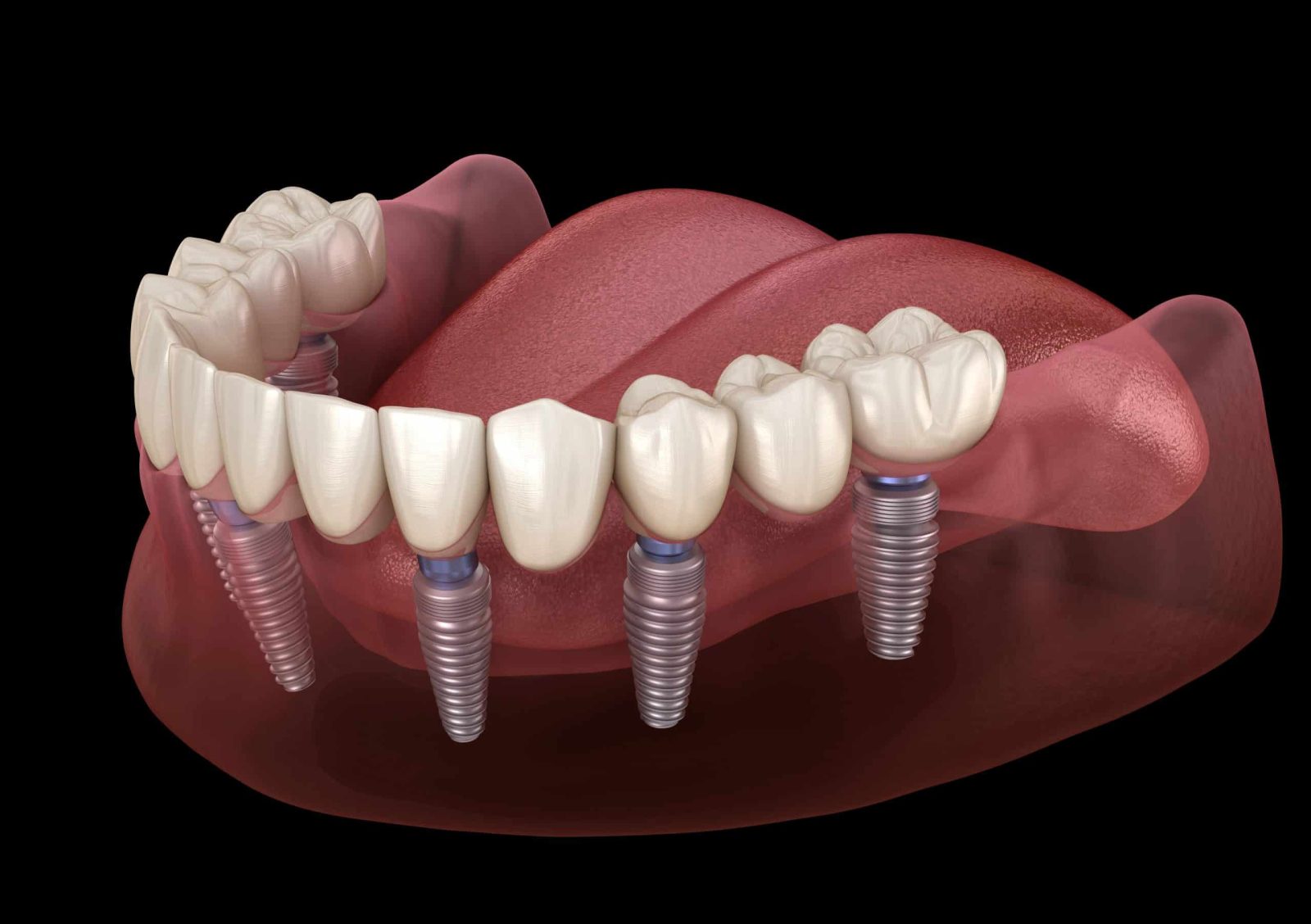
All-on-4 replaces a full arch of teeth with a fixed bridge supported by implants. You can treat:
- The upper arch only
- The lower arch only
- Both arches, often called full-mouth All-on-4
Which option is right depends on the health of your remaining teeth, your bone, your bite and your goals.
Upper All-on-4: What to Know
- Softer bone. The upper jaw usually has less dense bone than the lower jaw.
- The sinuses. Air spaces above the back teeth limit how much bone is available, which is one reason the back implants are often angled.
- No palate coverage. Unlike an upper denture, an upper All-on-4 bridge usually leaves the roof of your mouth open, which many patients love for taste and comfort.
- Extra implants for added security. Because the upper bone is softer, the extra support from additional implants is especially valuable here. Read All-on-4 vs. All-on-6.
Lower All-on-4: What to Know
- Denser bone, which often gives implants excellent stability
- A nerve to protect. A nerve runs through the lower jaw, and 3D planning keeps implants a safe distance away
- A big upgrade over lower dentures, which are often the hardest dentures to keep in place because the tongue pushes them loose
When Treating One Arch Makes Sense
- Only one arch has failing or missing teeth
- Your other arch has healthy natural teeth, or teeth that can be restored with crowns or fillings
- You’re comfortable with a denture on the other arch for now
- You’d like to stage treatment over time for budget reasons
When Treating Both Arches Makes Sense

- Both arches have failing teeth or loose dentures
- You want one surgery and one recovery period
- You want a fully balanced bite designed all at once
- You want the most complete transformation of your smile and chewing
Why We Place More Than Four Implants Whenever Possible
Even though the treatment is called All-on-4, at The Dental Center of Jefferson we always aim to place more than four implants per arch whenever your bone allows. It’s one of the most important ways we protect your long-term result.
- A built-in backup. If one implant ever has a problem in the future, the remaining implants can continue to support your bridge. In many cases, you keep your fixed teeth while the problem implant is treated or replaced, instead of losing the whole bridge.
- Less force on each implant. Spreading chewing forces across more implants reduces stress on each one, the screws and the bridge.
- More stability, especially in the upper jaw, where bone is usually softer.
- More options down the road. Extra implants give us more flexibility if your bridge needs to be redesigned or replaced years from now.
The exact number depends on your bone, your bite and your health, and your 3D scan shows us what’s possible. But our goal is always the same: give you a margin of safety so your smile is protected for the future.
Your Opposing Teeth Matter
Whatever you treat, your new teeth will bite against something: natural teeth, a denture or another implant bridge. Each creates different forces. Dr. Jabr plans the bite, or occlusal scheme, so chewing forces are balanced. This protects both arches and helps your implants and bridge last.
Your final bridge material is part of that plan too. At our office, zirconia and acrylic bridges are the same price, and we choose based on your bite.
Upper vs. Lower All-on-4 at a Glance
| Upper arch | Lower arch | |
|---|---|---|
| Bone density | Usually softer | Usually denser |
| Key anatomy to plan around | Sinuses | Nerve in the jaw |
| Number of implants at our office | Whenever possible, more than 4 | Whenever possible, more than 4 |
| Biggest upgrade over dentures | Roof of mouth left open | Stops a loose lower denture |
How We Decide
- Medical review, including medications, smoking and vitamin D
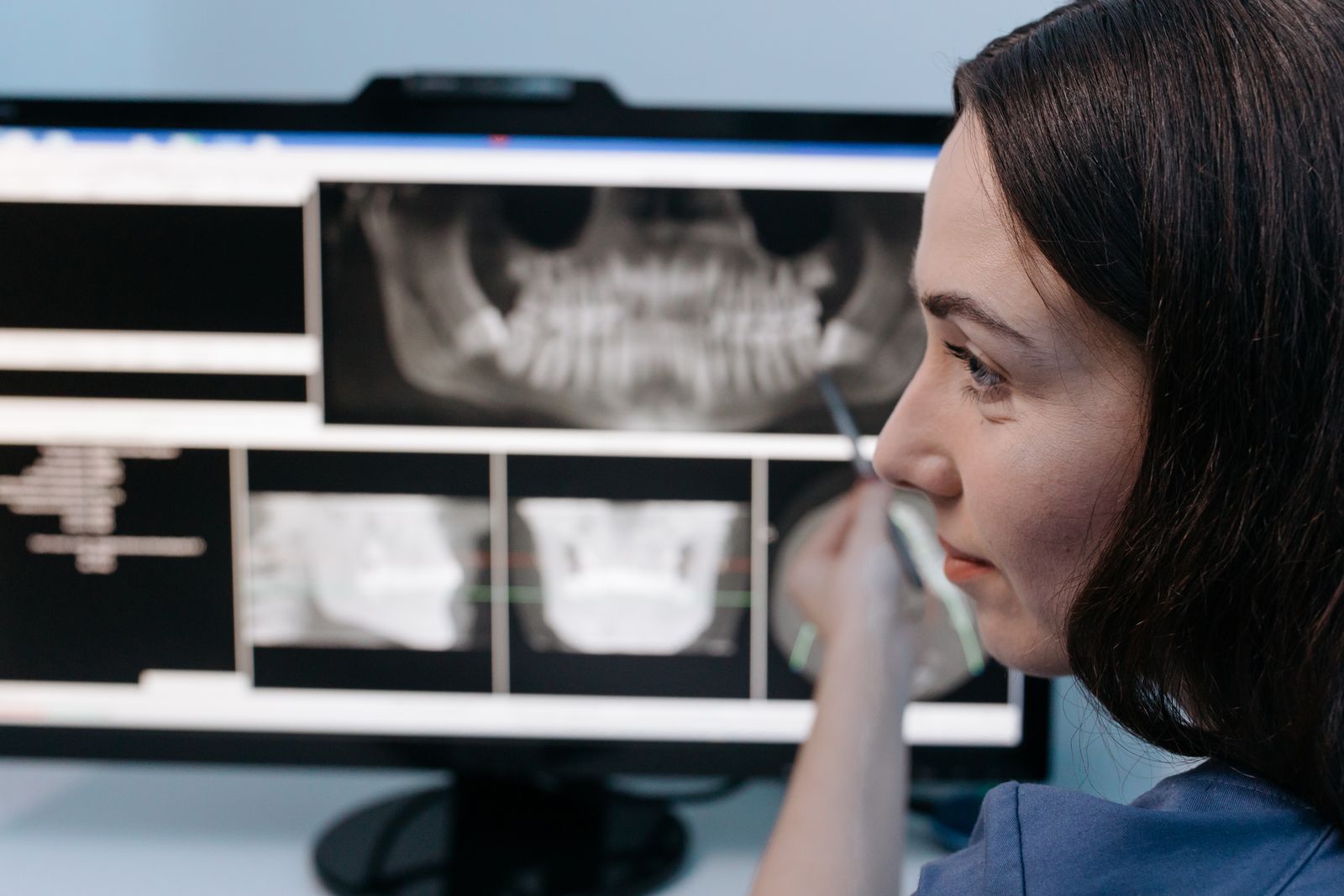
- 3D CBCT scan of both jaws
- Evaluating every remaining tooth to see which can be saved
- Bite analysis to plan how both arches will work together
- A clear plan with options for one or both arches, and a written cost breakdown

Upper, Lower or Both: FAQs
Why do you place more than four implants?
Placing extra implants whenever the bone allows gives you a backup. If one implant ever has a problem, the others can keep supporting your bridge while it’s treated, and chewing forces are spread across more implants.
Can I get All-on-4 on just one arch?
Yes. Many patients treat only the upper or only the lower arch, depending on which teeth are failing. The opposite arch can be natural teeth, a denture or a future implant bridge.
Is upper or lower All-on-4 more difficult?
The upper jaw usually has softer bone and the sinuses limit space in the back, so it can require more careful planning or additional implants. The lower jaw has denser bone but a nerve that must be avoided. A 3D scan guides both.
Is it better to do both arches at the same time?
For patients who need both, treating them together often means one surgery, one recovery and a balanced bite designed all at once. Some patients prefer to stage treatment for budget or comfort reasons.
What if I already have a denture on one arch?
Your existing denture can sometimes be adjusted to work with a new All-on-4 on the opposite arch, or you may consider a snap-in denture. We’ll plan the bite so both arches work together.
Does treating one arch affect my bite?
Yes. The new arch must be designed to meet your opposing teeth correctly. We plan your bite carefully so chewing forces are balanced and both arches stay healthy.
Plan Your All-on-4 Treatment
Call The Dental Center of Jefferson at (973) 663-4220 to schedule a consultation with Dr. Jabr. We welcome patients from across Sussex, Morris and Warren counties. You can also read All-on-4 cost and the treatment process, compare All-on-4 vs. snap-in dentures, or visit our All-on-4 dental implants page.
About the author: Dr. Mostafa Jabr, DMD, is a general and restorative dentist and the owner of The Dental Center of Jefferson in Lake Hopatcong, NJ, where he helps patients from across North Jersey restore their smiles with dental implants and full-arch treatment.
This article is for general education and isn’t a substitute for a personal exam. Every patient’s situation is different.